On March 29, 2023, the Students on Ice Foundation returned to New York City for the first time in four years for their fundraiser, To the Ends of the Earth. Hosted at the historic Explorers Club, this event reunited some of the foundation’s closest friends and supporters for an inspiring evening in support of SOI’s impactful expedition programming.
The event began with a light reception. As guests mingled and made new acquaintances, organic connections formed between individuals and organizations. The energetic networking session was capped off with an incredible welcome speech from, Explorer’s Club President, Richard Garrioutt.
Following Mr. Garrioutt, our host and M.C. for the evening, Evan Solomon welcomed guests to the dinner hall and made his opening remarks which set the tone for what would be an incredible evening of support and generosity. A video presentation highlighting SOI’s 2019 Arctic Expedition served as a great reminder of how the support from SOI’s last fundraiser came together to reinforce such an incredible learning journey. After the video, SOI’s Founder and Expedition Leader, Geoff Green took to the stage to share more about the foundation, and the work that they do.
Mr. Green explored the history of SOI, and how the foundation’s guiding message came to be; “to bring youth, educators, scientists, elders, explorers, and visionary leaders from around the world on experiential ship-based expeditions in the Arctic, Antarctic, and places in-between.” He outlined why experiential learning is such a key aspect of the organization, and illustrated its importance through the continued success of our programming, and the alumni who pursue careers within environmental industries, and the sustainable blue economy. To conclude his speech, Mr. Green invited the evening’s musical performers to take the stage, Sunsdrum.
Siqiniup Qilauta (Sunsdrum) lit up the stage with an incredible traditional throat singing performance. They demonstrated and explained some different types of songs, and the game behind it all. Our guests even got their own opportunity to feel the impact of experiential learning as Sunsdrum conducted a brief throat singing workshop which brought smiles all around. One lucky guest even made a donation and went one on one in a throat singing competition.
As the guests smiled and laughed on the back of an incredible interlude, the evening’s meal made its way into the hall. The dinner was sponsored by one of SOI’s oldest friends and supporters, Tarek Sherif, to whom SOI extended a special thank you. This led us to the highlight of the evening, our guest speaker, Isabella De La Houssey.
Isabella captivated guests as she described the “explorers mindset,” and how that has motivated her throughout her life. An accomplished ultra-athlete, Isabella has biked across the US, the UK, Tasmania and Taiwan, from Malawi to South Africa and Amsterdam to Luxembourg, swum across the Long Island Sound and the Canal de St. Marc in Haiti, run over 100 marathons and completed marathons on every continent and in every US state, completed more than 20 ironman races, ultra-endurance runs across the Sahara in Libya, through the Namibian Desert, across Costa Rica and South Africa, and climbed four of the seven Summits. Incredibly, Mrs. De La Houssey has completed many of these feats while battling stage-4 non-smokers lung cancer, and with her five children by her side. She credits her experience aboard an SOI expedition as an inspiration and sees these educational experiences as a platform for youth to develop that explorer’s mindset. Guests were awestricken and deeply inspired by her words.
To help demonstrate the impact that an expedition can have on the youth, Malaika Vaz, an SOI alumni shared her experiences with the program. Now the founder of a video production company that focuses on wildlife, she shared how she was inspired to take positive action in a way that was impactful and meaningful to her.
Toward the end of the evening, Mr. Sherif once again proved to be the example of generosity as he started an outpouring of additional donations and support for SOI’s upcoming youth programming. Guests went above and beyond as they joined in supporting the foundation with additional donations. With the silent auction’s final bid being placed, and winners announced shortly after, the evening began to conclude. Guests collected their winning items, including art from SOI partners and alumni, trips from Adventure Canada and Lindblad, and even new Canada Goose outerwear, which was worn home by the lucky bidder.
As the evening concluded, new acquaintances began to feel like old friends. The evening’s inspirational and affable tone ushered everyone home feeling proud, accomplished, and hopeful.
Special thanks to the generous partners that made this event possible:
The Sherif Foundation
Fondation Prince Albert II de Monaco
Lindblad Expeditions
Adventure Canada
Canada Goose
The Explorers Club
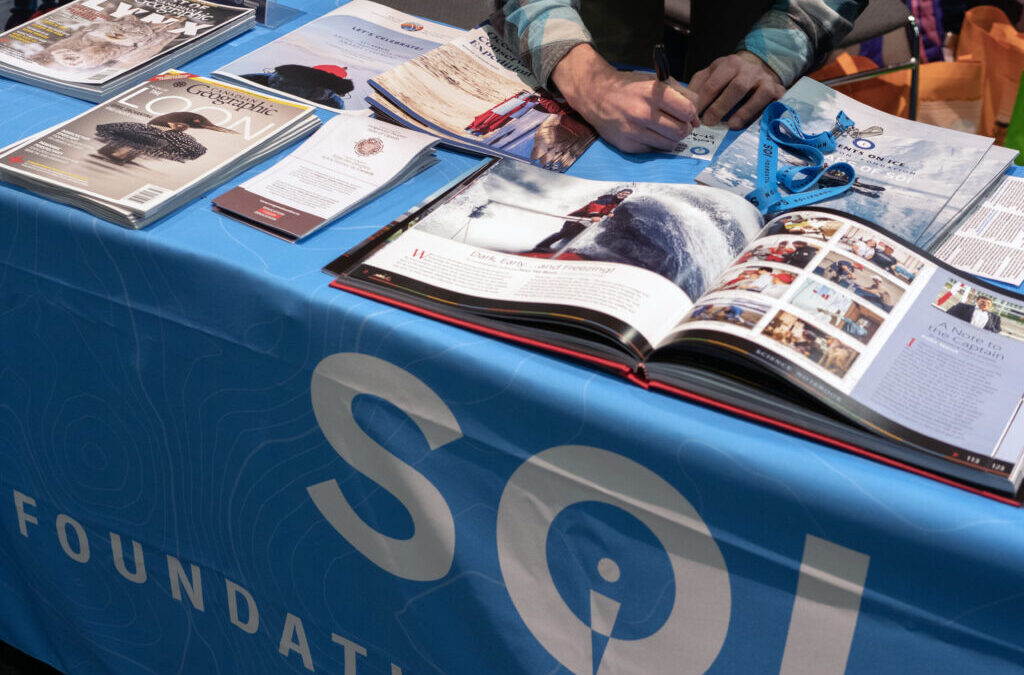
From February 7-11, 2023, the Students on Ice Foundation attended the Northern Lights Conference at the Shaw Centre in Ottawa, Ontario. This conference and trade show aims to highlight Eastern Canada’s Arctic and Northern Arctic industry, tourism, arts and culture. SOI was represented all week by our staff and alumni volunteers at our information booth and at various sessions. The following is a reflective blog, written by Tracy Moore, SOI’s Expedition Education Manager.
Relationships are built on key moments in time. That is the big takeaway for me from this year’s Northern Lights Conference. Yes – we were able to zoom, call, and send messages during the two years that travel was halted, but coming together with other stakeholders to co-develop ideas and solutions in person is much more impactful. During our five days at the conference, we had the privilege of making new friends and reconnecting with our alumni, and our long-standing SOI partners from Nunavut, Nunavik, and Nunatsiavut.
Reconnecting with our alumni in person was such an inspiring opportunity. Hearing how they are pioneering programs for youth to get engaged and keep the knowledge and people local, not having to travel to larger communities to engage in learning. Seeing how they are developing businesses based on cultural art and the history surrounding how those skills are passed down from generation to generation. Noting the importance of language and the creation of resources in Inuktitut to ensure the continued strengthening of the language. It was clear that these alumni are not only leading the way, they continue to carve the way forward on a daily basis.
The workshops at Northern Lights focused on capacity building in northern-led education, research, economic development, and the sustainable blue economy. It was great to see SOI alumni and partners representing Inuit businesses, organizations and communities and sharing their voices on these subjects.
Shared meanings, stories, and traditions are things that get transferred better in person. Sharing space with community members as we continue to amplify their voices, prioritize their needs, and co-create opportunities grounded in respect and sharing remains key to our SOI story.
Since the last time we participated at Northern Lights, SOI has launched our Blue Futures Pathways Program, Arctic Policy Cohort, and successfully executed our inaugural Ocean Conservation Expedition. All avenues where we have prioritized and amplified the voices of youth.
Just like our alumni, our SOI story also continues to evolve, and we want to bring everyone along for the ride. This past week we strengthened some new and developing relationships. We got to hear from some new partners, and we focused on incorporating more Indigenous youth voices into our programming. Many of these connections are in the early stages, but we are so proud to be developing something new and exciting for this upcoming year.
Now, we now find ourselves with the opportunity for our ship-based program to return to Inuit Nunangat. The timing could not be better to find ways to involve our new programs in our ship-based expeditions this summer, and for the years to come!
Against a backdrop of snow-capped mountains and the Pacific ocean, some 2,000 people from around the world gathered for the opening of The Fifth International Marine Protected Area Congress (IMPAC5) in Vancouver, B.C. The congress took place from February 3-9, with approximately 1,000 attendees joining virtually.
The event was hosted by the xʷməθkʷəy̓əm (Musqueam), Sḵwx̱wú7mesh (Squamish), and səlilwətaɬ (Tsleil-Waututh) Nations, alongside provincial and federal governments, the International Union for Conservation of Nature (IUCN), and Canadian Parks and Wilderness Society (CPAWS).
IMPAC5 took place at a critical time for ocean protection amid a dual climate and biodiversity emergency, and the United Nations Decade of Ocean Science for Sustainable Development. Just a couple of months prior, during the United Nations COP15 summit in Montreal, the international community set a goal of protecting a third of the planet by 2030, placing an emphasis on Indigenous rights. This means in the next eight years, marine protected and conserved areas have to grow from approximately eight percent globally to 30 percent – a goal commonly known as 30×30.
The world’s ocean plays an important ecological role in mitigating climate change, while also being impacted by it. It’s also a source of livelihood, food, leisure, and cultural and spiritual well-being. Canada, as the country with the longest coastline in the world, is no stranger to that.
So where does the SOI Foundation fit in?
SOI Foundation supports young people in gaining new perspectives, ideas, connections and collaborations that contribute to building an equitable and sustainable future for people and the planet.
In addition to sponsoring 14 youth to attend the pre-congress Coastal Connections camp, SOI’s team was there in various capacities. The Alumni team, with experience in supporting Indigenous youth delegations to international conferences, facilitated workshops and provided support for Indigenous youth during the Coastal Connections camp.
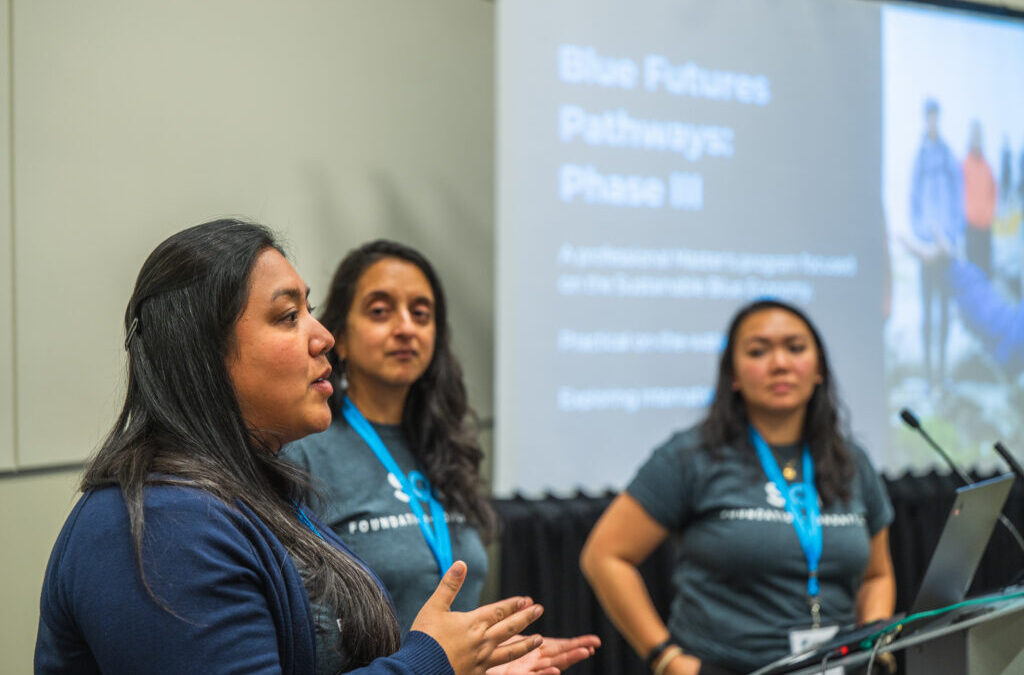
On the second day, the Blue Futures Pathways (BFP) program team held a knowledge-sharing session. The team, focused on supporting youth pursuing careers in the Sustainable Blue Economy, heard ideas from young professionals and partners that will inform the next phase of the program. The group shared about opportunities in nature-based innovations, the need to ensure Indigenous Knowledge Systems are incorporated into the Sustainable Blue Economy, and challenges that keep youth from participating meaningfully in the development of relevant programs.
Throughout the congress, SOI’s Partnership team lead, Graeme, nurtured relationships and built new ones. Many potential and existing partners, and alumni stopped by the SOI booth at the Ocean Expo. The booth was also home to the digital portion of the High Tide art exhibition, a collaboration between SOI and the Canadian Ocean Literacy Coalition. Physical artworks were placed around the event venue.
The Youth Archipelago at the Ocean Expo hosted a rotation of youth-facing organizations, including SOI. There, SOI team members Anna and Elise, along with the IMPAC5 young professional committee, met with Environment and Climate Change Minister Steven Guilbeault and Parks Canada CEO Ron Hallman to discuss the importance of MPAs.
Alumni team lead Lynda also spoke at the “Learning from our Stories” panel, and Canada C3 alumni Dr. Brian Hunt (University of British Columbia) joined the team for one day to share the importance of understanding environmental DNA (eDNA) in an urban setting. Dr. Hunt is part of the team leading the study of eDNA samples collected during SOI’s Canada C3 expedition from all three coasts, an example of the impactful work that can be done in a Sustainable Blue Economy career.
At a breakout session on the third day, Kate Matari, Alianai Niviatsiak, Joshua Komangapik, Megan Humchitt and Vicky Grant (all SOI alumni) invited IMPAC5 delegates to sit in a circle as they shared stories of their connection to the ocean. There were stories of subsistence hunting, community food sharing, learning through observation, seasonal changes, intergenerational trauma and healing, as well as cultural revitalization through connection to the land, water, and ice. They shared hopes for the future and visions for the way their children will relate to the ocean.
There are two main takeaways from IMPAC5:
Indigenous leadership is key to advancing ocean conservation and a sustainable blue economy.
Youth voices are powerful.
During the congress, we learned about many Indigenous co-managed initiatives that have advanced, including the historic Great Bear Sea MPA network that is now under the stewardship of 15 First Nations in British Columbia. It was clear that courage, collaboration, and persistence are needed to advance Indigenous-led initiatives.
On the final days, SOI team member Anna attended the Leadership Forum. The forum included round table discussions featuring ministers, government officials, as well as Indigenous and NGO representatives. A number of young professionals were invited to observe, make comments and ask questions.
The forum reiterated that meaningful Indigenous involvement is key for the international community to reach 30×30.
IMPAC5 ended with the Government of Canada announcing a moratorium on deep-sea mining. The voices of activists, including youth, pushing for this were heard loud and clear during the congress.
During the closing ceremony, Mel White, an Anishinaabe woman who was part of the Young Professionals Committee, reminded us that “we’re surrounded by water, we’re connected by water, and because of this, we’re all ocean people.”
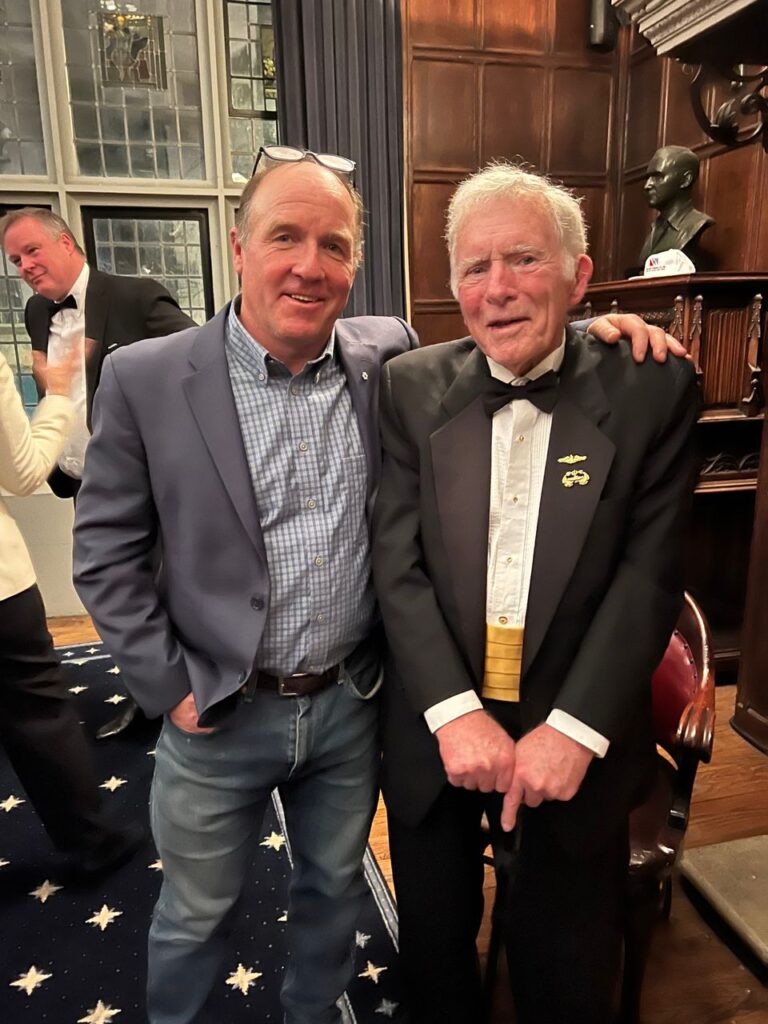
Last night was a very special celebration and tribute to Dr. Don Walsh at The Explorers Club in NYC.
An inspiring evening for a very special person, best known for his historic dive to the bottom of the Mariana Trench in 1960, which led to a lifetime of research and leadership for our understanding of the global ocean. Don has received almost every award possible, but last night saw a line up of leaders and explorers that just wanted to share how much Don meant to them, and how he had inspired them on their life journeys.
About 25 years ago Geoff Green met Don (now 91 yrs old) on the gangway of ship minutes before we were about to set sail to Antarctica. Don has been a great mentor, always there for wisdom, sage advice, and definitely some laughs, and has been a massive champion for the Students on Ice Foundation and a member of our board. In fact, he was one of the key catalysts that strongly encouraged and supported the idea and eventual birth of SOI all those years ago. And as many Students on Ice Alumni know, Don has been on numerous SOI expeditions from pole to pole, sharing his incredible knowledge and life experiences.
Congratulations again Don on your amazing, ongoing journey and the impact you have had on so many people and the Planet!
This was a key question in the minds of the 10 Students on Ice delegates we sent south to Antarctica in December 2022. Our delegates had the incredible opportunity to visit this beautiful and magical continent and the incredible wildlife who call it home. Along the way, delegates learned about the ecosystem and global connections, explored geopolitics, discussed tourism, science, and learned with and from each other.
My experience as part of the 2022 SOI delegation to Antarctica has been life-changing. It has allowed me to connect with an amazing group of young, like-minded people, all eager to embark on this learning journey together.
– Veronica Flowers, Antarctic Delegate
Everyone had a different impact on me throughout the trip and being with them made me feel like I just heard my favourite song for the first time. The energy was so safe, where I spent the full 20+ days with my heart open. I can’t name a moment that I would change. All nine of them became my instant family, they will be in the stories I tell for the rest of my life. There is no other feeling I can describe besides feeling like I belong when I’m with them.
– Jessica Wadhams-Mountain, Antarctic Delegate
The journey took us south through Ottawa, Buenos Aires, and Ushuaia, Argentina. Along the way, we explored the cities and met with many important people doing work in Antarctica. Once on the ship, our days were divided by visits to penguin rookeries, zodiac cruises along channels dotted with icebergs, citizen science activities, workshops, and presentations.
Our delegation consisted of a group of eight SOI youth alumni, aged 20-30 years old, all joining with different perspectives, interests, and roles. Delegates came from coast to coast to coast and were a mix of students and working professionals, such as government representatives, media specialists, scientists, and artists. The group was rounded off by SOI lead Jennifer Williams and Samantha Hogg from Polar Knowledge Canada (POLAR) who joined the delegation as a government representative, bringing our total to 10 delegates. POLAR is Canada’s lead federal agency on polar science and technology, including Antarctica. They were one of the key funding partners for this delegation and we were very fortunate to have Samantha with us for the journey helping to explore important questions like:
What are the linkages between the Arctic and the Antarctic?
Why is Canada’s potential membership as a Consultative Party in the Antarctic Treaty System important?
How does this important work in Antarctica connect to Ocean Conservation and Climate Change?
The most important document when discussing Antarctica, and one of the key areas of focus for our expedition was The Antarctic Treaty itself. The Treaty was signed in 1959 and “recognizes that it is in the interest of all humankind that Antarctica shall continue forever to be used exclusively for peaceful purposes and should not become the scene or object of international discord.”
Canada has been a non-consultative party member to the Treaty since 1988, meaning we are invited to attend the annual consultative meetings, but we have no decision-making power. As a polar nation, and a country with significant interests including an active science community doing work in Antarctica, Canada should have a voice at the table, and is actively applying for full consultative party member status.
The Antarctic Treaty has often been described as successful in maintaining the peace and balance of Antarctica for decades, however, the only way for it to be better is through constant reevaluation and improvement.
– Da Chen, Antarctic Delegate
Our educational journey kicked off at SOI Headquarters when we met with David Taillefer of Environment and Climate Change Canada, and Beatrice Toutant, from Global Affairs Canada, another incredible funding partner. They explained how the impact of climate change on Antarctica has global implications and how climate change has a disproportionate impact on the polar regions. Canada is a polar nation and it is crucial that we pay attention and get involved. While Canada is a non-consultative party member to the Treaty, it is important to note that Canada has been a full party to the Protocol on Environmental Protection to the Antarctic Treaty (Environmental Protocol) since 2003, and has an Antarctic Environmental Protection Act. David and Beatrice taught our delegates more about this and some of the other policies we would be interacting with in Antarctica.
While in Ottawa we also chatted with SOI alumnus, and former Executive Director of SCAR (Scientific Committee on Antarctic Research) Jenny Baeseman, visited with His Excellency Whit Fraser at Rideau Hall, and stopped by the Canadian Museum of Nature.
Our delegation’s second stop was in Buenos Aires and although it was quick, we made the most of it. We had a special visit with the Canadian Ambassador to Argentina and enjoyed a special visit to the Antarctic Secretariat, who shared many details about The Antarctic Treaty, and how important our delegation is to making connections between Argentina and Canada. We also squeezed in a walking tour to stretch our legs and explore this beautiful capital city!
Heureusement, avec les opportunités que nous offre Students On Ice, je peux dire que nous sommes non seulement très privilégiés, mais aussi très bien entourés. Tout au long de cette aventure, nous avons rencontré des gens qui croyaient au pouvoir des jeunes et à leur vision.
– Arianne Tremblay, Antarctic Delegate
Finally, our Antarctic delegation arrived safely in Ushuaia, Argentina – the Southernmost city in the world – and had the joy and privilege of spending three full days there to continue our important journey to the bottom of the Earth.
While in Ushuaia, our delegation was invited to Centro Austral de Investigaciones Cientificas (CADIC) to speak with Irene Schloss and Cristian Lorenzo. Irene is an Antarctic Researcher best known for her research on plankton biology, however, she also supervises a wide variety of scientific research in Antarctica and helped delegates continue to build their understanding of the ecosystem they will soon be visiting. Cristian Lorenzo brought a geopolitical lens to the conversation helping build links between science and policy.
Cristian mentioned how there are different perspectives between the Global North and Global South when it comes to the questions of Antarctica and I feel that my background as a Chinese-Canadian immigrant, I can bring about the view and lived experiences that others do not have which can help with the delegation’s purpose.
– Da Chen, Antarctic Delegate
Time in Ushuaia was also spent at an Argentine Quincho with old friends and new, with lots of delicious food, and stories shared about SOI’s history in Antarctica over the past 23 years!
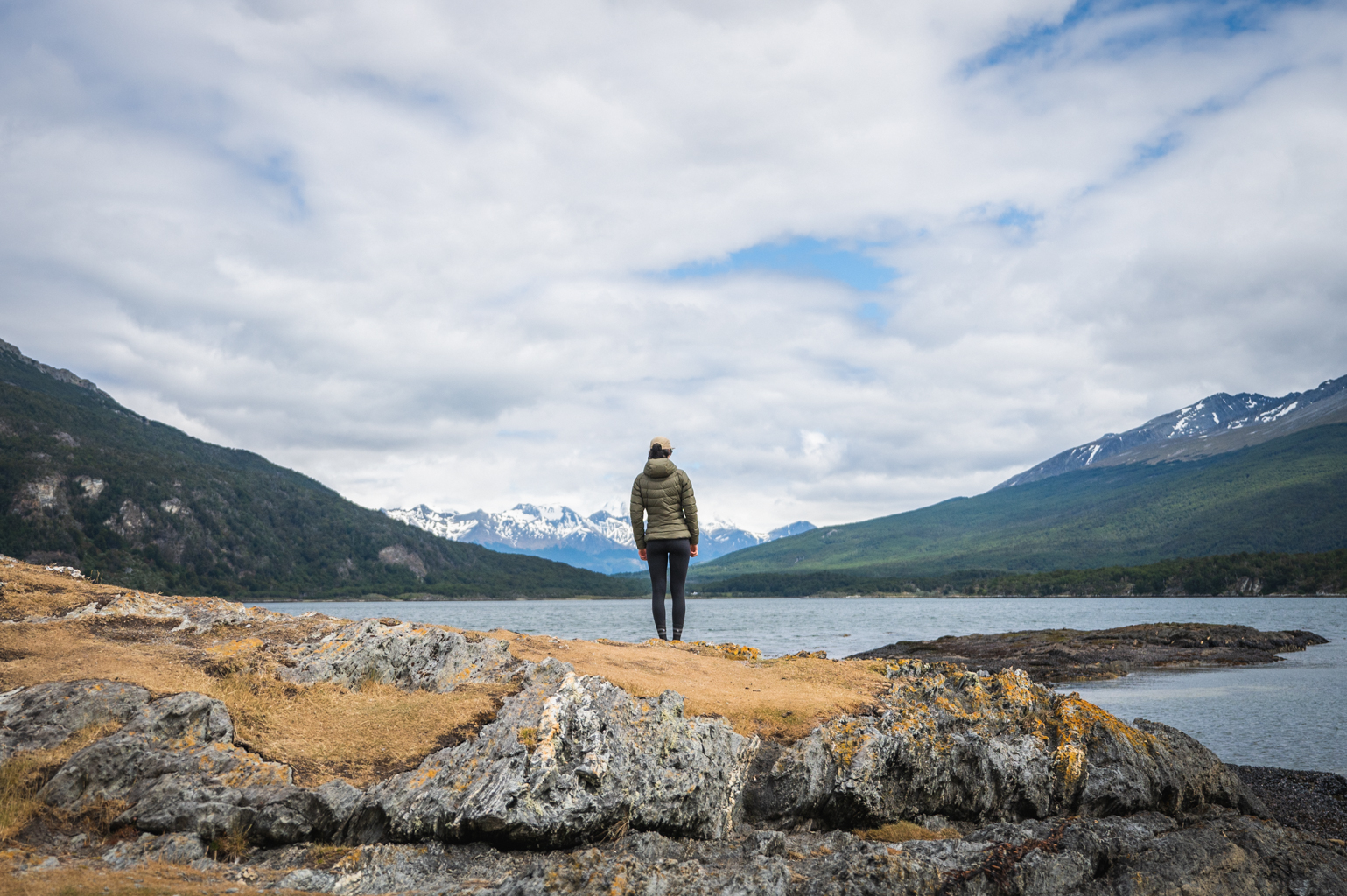
We experienced a full day in the Tierra del Fuego National Park with our wonderful guide Ana and M&C Tours. It was a beautiful day of blue skies and crystal-clear water – great to be out on the land, exploring this beautiful part of the world and learning about the region’s rich history, both about the Yámana, the Indigenous people who inhabit the land in Terra del Fuego, and its geological/ecological history. Although not directly related to Antarctica, this day got us thinking about Indigenous knowledge and the relationship to the land.
Although Antarctica is the only continent with no Indigenous peoples, there are local and Indigenous people in gateway countries to the Antarctic (Argentina, New Zealand, etc). At the start of the expedition, I learned how certain areas of Antarctica are claimed by various countries which, in most cases, have no relation to the polar regions.
– Veronica Flowers, Antarctic Delegate
Finally, it was embarkation day, and we were set to board our new home away from home, the MS Seaventure, operated by Polar Latitudes – but we managed to squeeze in one more call. Leading up to today, we spent a lot of time talking about the geopolitical and scientific aspects of Antarctica, so it was important that we shifted our thinking toward tourism prior to boarding a tourist vessel. Our team had a call with Hayley Collings at IAATO – the International Association of Antarctic Tour Operators. Hayley shared IAATO’s mandate to advocate and promote safe and environmentally responsible tourism. IAATO members have created a list of requirements for all tourism operations. They hold no enforcement powers, but they do have a robust data collection system of tourism activity on the continent and report back to the Antarctic Treaty System to help them determine if, and how, to better manage the activity. Hayley shared that Antarctic tourism is growing at a very high rate and that the only accountability measures for operators are through the Treaty System which is a slow-moving consensus-based model. The tourism industry was a recurring topic of conversation throughout the expedition.
One ship can say they’re only disturbing the wildlife a smidge, but if you add them all up per trip/ship, the wildlife isn’t living that freely. The penguins are getting so stressed that in some cases they aren’t reproducing.
– Jessica Wadhams-Mountain, Antarctic Delegate
Tourism’s investment into Antarctic conservation is also an investment into their asset. This is a necessary act of reciprocity if we are to continue admiring Earth’s ice continent.
– Ronnie Noonan-Birch, Antarctic Delegate
Once onboard the Seaventure, we set sail down the Beagle Channel and out into the Drake Passage. It took two days to cross the passage to the Antarctic Peninsula, providing time for delegates to find their sea legs, attend presentations by the Polar Latitudes team, and conduct important Citizen Science.
Citizen science is research that engages the public as data collectors. The Polar Citizen Science Collective is a grouping of projects in the polar regions that engage with expedition companies like Polar Latitudes to collect data that would otherwise be very expensive and challenging to obtain. The polar regions are areas most at risk to climate change and building an understanding of these changes is crucial. Projects that we took part in, included cloud surveys for NASA, bird counts for the Southern Ocean Seabird Survey with eBird, whale identification with HappyWhale, and work with FjordPhyto, taking water samples to understand the impacts of climate change on phytoplankton, the species at the base of the food web in Antarctica.
…phytoplankton contribute to over half of the earth’s oxygen and they’re also the base of the food web. Phytoplankton provides food for Antarctic krill and ultimately penguins, seals, and whales. With the waters warming it may have a major impact on the phytoplankton.
– Jessica Wadhams-Mountain, Antarctic Delegate
Beyond the citizen science, our expedition days were filled with shore landings, zodiac rides, and ship cruises through the ice. The team saw many humpback whales, gentoo penguin colonies, and nesting blue-eyed shags. We also visited Port Lockroy, the UK penguin post office, and explored ice of all shapes and sizes.
Being a part of this delegation to Antarctica has given me the opportunity to experience a place that so few people will ever see. I want to use art as a form of science communication and storytelling to raise awareness about the impact of climate change in the polar regions.
– Meg O’Hara, Antarctic Delegate
And of course, our team took some time for the Polar Plunge, an SOI tradition – a dip in the Southern Ocean. The water measured zero degrees celsius that day as the snow gently fell, but that didn’t stop our 10 brave delegates!
When not out adventuring, our delegation had access to a special boardroom on the MS Seaventure where Samantha Hogg facilitated discussions around the big questions of the journey. One of POLAR’s current objectives is to build a National Antarctic Research Program that will serve to support the Canadian Antarctic scientists who are already doing important work in Antarctica and support international collaboration efforts. Through these conversations, we also learned about many of the other groups doing important work in Antarctica such as SCAR (Scientific Committee on Antarctic Research) and COMNAP (Council of Managers of National Antarctic Programs). Canada recently became a full member of COMNAP whose work focuses on cooperative logistics, operations, and science support. Our delegates learned more about the Antarctic research stations on the continent with a game developed by COMNAP.
As an early career researcher in Canada’s north, I know that community consultation and engagement are a cornerstone for any ethics approval process for projects to take place in the north. My master’s research focuses on research ethics in the north, and I’d like to understand how this could become relevant to Antarctica. The process for Arctic research isn’t quite the same as the Antarctic; there is no Indigenous consultation required. Many people who are making decisions about the Antarctic have no lived experience of the polar regions and what it takes to protect such environments.
– Veronica Flowers, Antarctic Delegate
Some of the big questions we explored during this second half of the voyage included: How can Polar Knowledge Canada best support early career researchers and address equity, diversity, and inclusion in its scientific research support and international collaborations? And, how can Canada take a more active role as an environmental steward in the protection and conservation of the Antarctic and the Southern Ocean in partnership with Antarctic Treaty Consultative Party members?
Another focus was on a sustainable blue economy. Many conversations throughout our voyage centred around ocean conservation, alongside the consideration of career pathways that are connected to the ocean. Our delegation primarily focused on science and research, tourism, and maritime careers.
Near the end of the voyage, one of our team members, Laura, from Polar Latitudes, delivered a lecture on climate change and the Antarctic and included a comparison between the two poles. While there are numerous differences it is undeniable that what happens in Antarctica affects the entire world, including communities in Canada, and especially the North. Changes are happening and it is important that we continue to build our understanding of the poles and that we all take action to address climate change in our own communities and lives.
Our delegation may be complete but the journey has just begun for our team as they continue to reflect on their journey and consider how to incorporate this experience, and all of the lessons that came with it, into their daily lives.
During this trip, I have fallen in love with Antarctica. The unique landscapes, the vast beauty and the sculptures of ice that decorate the Southern Ocean have changed the way I see my role in conservation. As a polar nation ourselves, I hope that by showing Canadians the beauty of Antarctica that they will fall in love with it as well.
– Meg O’Hara, Antarctic Delegate
I want to acknowledge the obvious, that it was just as CO2 intensive for me to go to Antarctica as it is for any other tourist. With many thanks to SOI, I am walking away from this privileged experience with a newfound love of Antarctica. But, also with debt; how do I make sure I can give back to the continent that gave me so much? I hope one day I can do Antarctica proud.
– Ronnie Noonan-Birch, Antarctic Delegate
My advice to people at home is to not let being scared hold you back from living your dream. Being scared of failure, you will fail to try, so take every opportunity that is handed to you; it may be beneficial for your next step. I never thought I would have accomplished all the things I’ve done at this age, but taking that step into being uncomfortable has guided me to meet/see life changing people and things. If it makes you nervous, it is most likely worth it.
– Jessica Wadhams-Mountain, Antarctic Delegate
I am forever grateful for this opportunity from SOI and will share my experience as best I can. A big take-home message for me is the need for younger visitors, both Indigenous and non-Indigenous, in the Antarctic, not just young researchers, but young visitors to learn and experience the reality of Antarctica. The reality is on average, only older demographics of people who have both the time and money are making the trek down to the Antarctic. What about the young Indigenous people who care about the environment and have lived experiences? I sense the need for a younger Antarctic audience, especially Indigenous youth and those in local surrounding regions who can provide unique perspectives and make a difference for their future.
– Veronica Flowers, Antarctic Delegate
Taking a step back and with humility might help with understanding the different worldviews, such as an Indigenous worldview. We can and should reevaluate our connection and relationship with the Earth, be it in Antarctica or in Canada, and look to improve our relationship with the land. Canada has an opportunity to bring these important lessons to the conservation of Antarctica, but it first requires Canada and Canadians to look within and follow through on our journey of Truth and Reconciliation. We should not work in an unequal or extractive relationship with the land but rather work with the land and understand different worldviews as we work towards a better future.
– Da Chen, Antarctic Delegate
Mon objectif pour le futur, pour donner suite à cette expédition en antarctique, est de je partager mes connaissances avec ma ville d’origine afin d’inspirer davantage de jeunes à se lancer dans ces aventures comme mes compatriotes et moi l’avons fait. J’aimerais me faire une voix pour les jeunes de régions éloignées et de communauté qui souhaitent faire entendre leur cause, mais qui ne savent pas trop par quelle étape commencer ou comment s’y prendre. J’ai choisi le domaine de l’enseignement car je suis confiante que les jeunes que je croiserai sur mon parcours pourront m’en apprendre beaucoup et vice versa.
– Arianne Tremblay, Antarctic Delegate