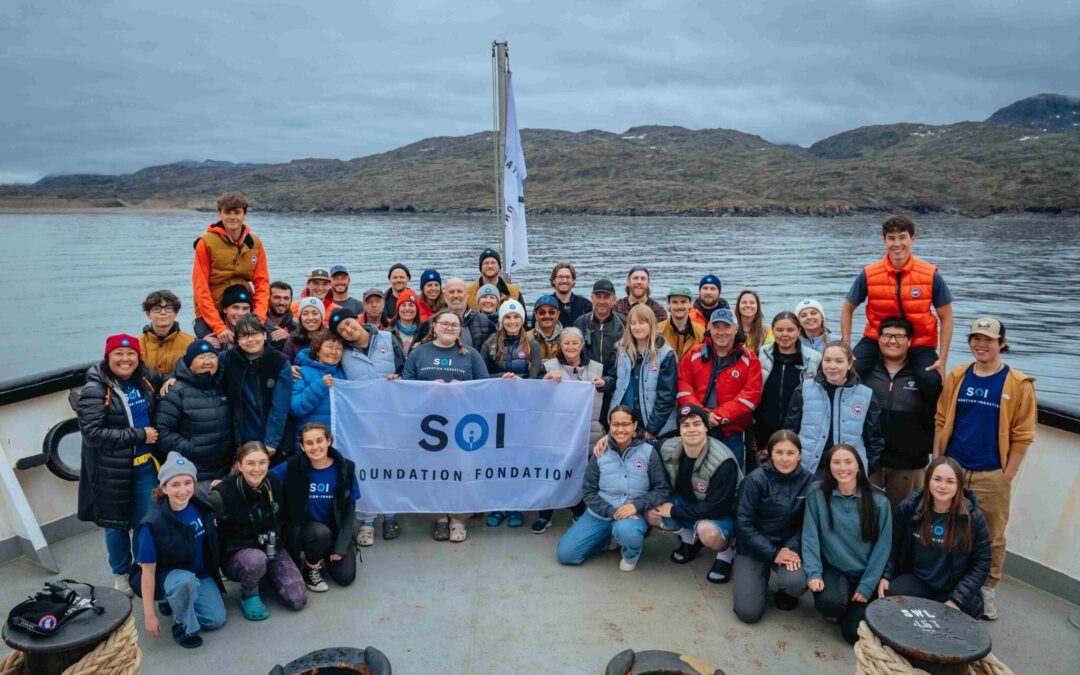
Recap on the 2024 Expedition Season for SOI
Another year of amazing expeditions

Another year of amazing expeditions


“Four expeditions that started back in late June! What a whirlwind of logistics, travel, communications, adventure, and so much more.” – Geoff Green
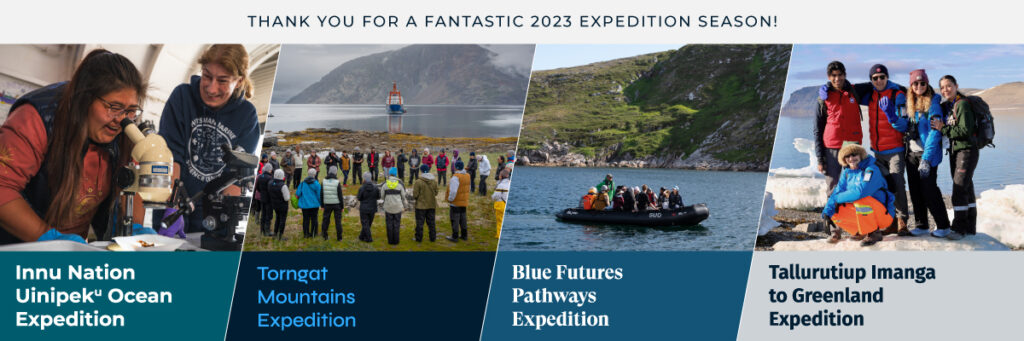
Each expedition had it’s own journey, read more on the website of SOI!

Innu Nation Uinipeku Ocean Expedition June 29th – July 19th
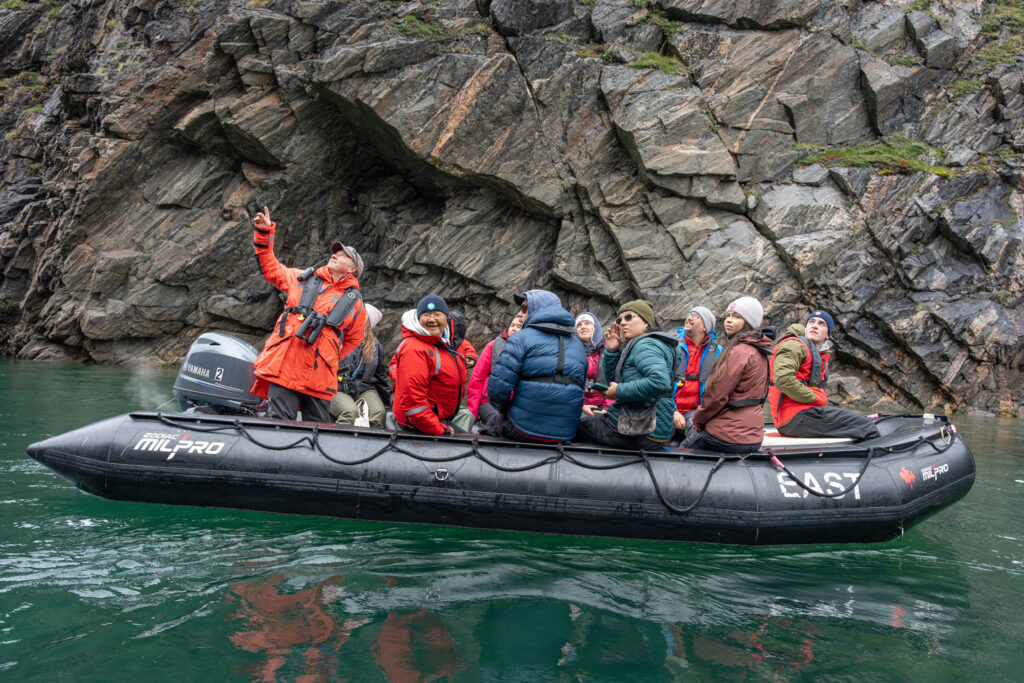
Students on Ice Torngat Mountains Expedition July 19th -31st

Blue Futures Pathways Expedition: Newfoundland and Labrador July 31st – August 10th
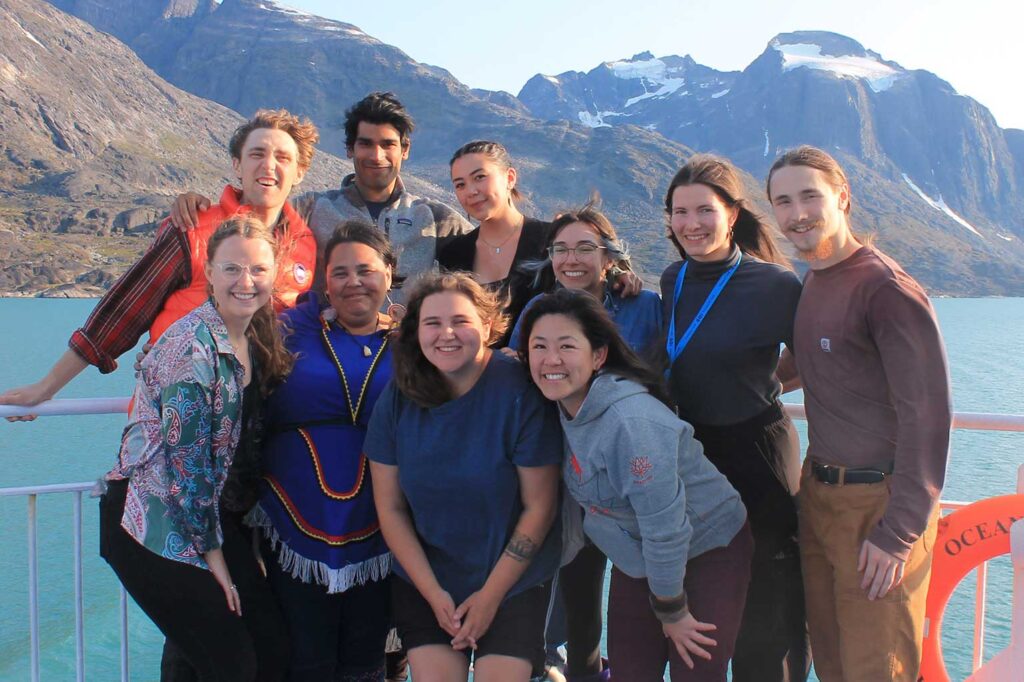

Why is Antarctica important for Canada?
This was a key question in the minds of the 10 Students on Ice delegates we sent south to Antarctica in December 2022. Our delegates had the incredible opportunity to visit this beautiful and magical continent and the incredible wildlife who call it home. Along the way, delegates learned about the ecosystem and global connections, explored geopolitics, discussed tourism, science, and learned with and from each other.
My experience as part of the 2022 SOI delegation to Antarctica has been life-changing. It has allowed me to connect with an amazing group of young, like-minded people, all eager to embark on this learning journey together.
– Veronica Flowers, Antarctic Delegate
Everyone had a different impact on me throughout the trip and being with them made me feel like I just heard my favourite song for the first time. The energy was so safe, where I spent the full 20+ days with my heart open. I can’t name a moment that I would change. All nine of them became my instant family, they will be in the stories I tell for the rest of my life. There is no other feeling I can describe besides feeling like I belong when I’m with them.
– Jessica Wadhams-Mountain, Antarctic Delegate
The journey took us south through Ottawa, Buenos Aires, and Ushuaia, Argentina. Along the way, we explored the cities and met with many important people doing work in Antarctica. Once on the ship, our days were divided by visits to penguin rookeries, zodiac cruises along channels dotted with icebergs, citizen science activities, workshops, and presentations.

Our delegation consisted of a group of eight SOI youth alumni, aged 20-30 years old, all joining with different perspectives, interests, and roles. Delegates came from coast to coast to coast and were a mix of students and working professionals, such as government representatives, media specialists, scientists, and artists. The group was rounded off by SOI lead Jennifer Williams and Samantha Hogg from Polar Knowledge Canada (POLAR) who joined the delegation as a government representative, bringing our total to 10 delegates. POLAR is Canada’s lead federal agency on polar science and technology, including Antarctica. They were one of the key funding partners for this delegation and we were very fortunate to have Samantha with us for the journey helping to explore important questions like:
What are the linkages between the Arctic and the Antarctic?
Why is Canada’s potential membership as a Consultative Party in the Antarctic Treaty System important?
How does this important work in Antarctica connect to Ocean Conservation and Climate Change?
The most important document when discussing Antarctica, and one of the key areas of focus for our expedition was The Antarctic Treaty itself. The Treaty was signed in 1959 and “recognizes that it is in the interest of all humankind that Antarctica shall continue forever to be used exclusively for peaceful purposes and should not become the scene or object of international discord.”
Canada has been a non-consultative party member to the Treaty since 1988, meaning we are invited to attend the annual consultative meetings, but we have no decision-making power. As a polar nation, and a country with significant interests including an active science community doing work in Antarctica, Canada should have a voice at the table, and is actively applying for full consultative party member status.
The Antarctic Treaty has often been described as successful in maintaining the peace and balance of Antarctica for decades, however, the only way for it to be better is through constant reevaluation and improvement.
– Da Chen, Antarctic Delegate
Our educational journey kicked off at SOI Headquarters when we met with David Taillefer of Environment and Climate Change Canada, and Beatrice Toutant, from Global Affairs Canada, another incredible funding partner. They explained how the impact of climate change on Antarctica has global implications and how climate change has a disproportionate impact on the polar regions. Canada is a polar nation and it is crucial that we pay attention and get involved. While Canada is a non-consultative party member to the Treaty, it is important to note that Canada has been a full party to the Protocol on Environmental Protection to the Antarctic Treaty (Environmental Protocol) since 2003, and has an Antarctic Environmental Protection Act. David and Beatrice taught our delegates more about this and some of the other policies we would be interacting with in Antarctica.
While in Ottawa we also chatted with SOI alumnus, and former Executive Director of SCAR (Scientific Committee on Antarctic Research) Jenny Baeseman, visited with His Excellency Whit Fraser at Rideau Hall, and stopped by the Canadian Museum of Nature.
Our delegation’s second stop was in Buenos Aires and although it was quick, we made the most of it. We had a special visit with the Canadian Ambassador to Argentina and enjoyed a special visit to the Antarctic Secretariat, who shared many details about The Antarctic Treaty, and how important our delegation is to making connections between Argentina and Canada. We also squeezed in a walking tour to stretch our legs and explore this beautiful capital city!
Heureusement, avec les opportunités que nous offre Students On Ice, je peux dire que nous sommes non seulement très privilégiés, mais aussi très bien entourés. Tout au long de cette aventure, nous avons rencontré des gens qui croyaient au pouvoir des jeunes et à leur vision.
– Arianne Tremblay, Antarctic Delegate
Finally, our Antarctic delegation arrived safely in Ushuaia, Argentina – the Southernmost city in the world – and had the joy and privilege of spending three full days there to continue our important journey to the bottom of the Earth.
While in Ushuaia, our delegation was invited to Centro Austral de Investigaciones Cientificas (CADIC) to speak with Irene Schloss and Cristian Lorenzo. Irene is an Antarctic Researcher best known for her research on plankton biology, however, she also supervises a wide variety of scientific research in Antarctica and helped delegates continue to build their understanding of the ecosystem they will soon be visiting. Cristian Lorenzo brought a geopolitical lens to the conversation helping build links between science and policy.
Cristian mentioned how there are different perspectives between the Global North and Global South when it comes to the questions of Antarctica and I feel that my background as a Chinese-Canadian immigrant, I can bring about the view and lived experiences that others do not have which can help with the delegation’s purpose.
– Da Chen, Antarctic Delegate
Time in Ushuaia was also spent at an Argentine Quincho with old friends and new, with lots of delicious food, and stories shared about SOI’s history in Antarctica over the past 23 years!

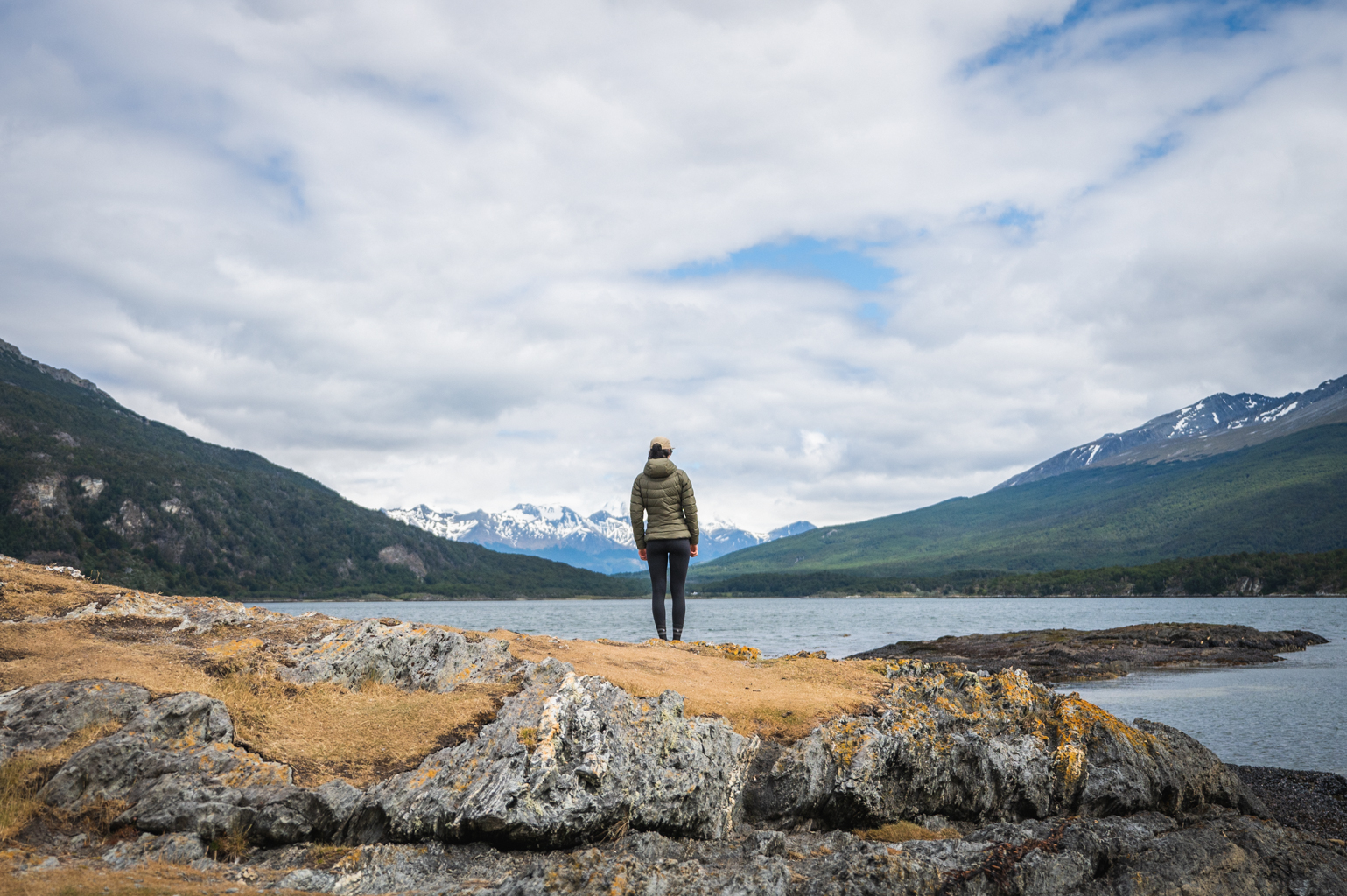
We experienced a full day in the Tierra del Fuego National Park with our wonderful guide Ana and M&C Tours. It was a beautiful day of blue skies and crystal-clear water – great to be out on the land, exploring this beautiful part of the world and learning about the region’s rich history, both about the Yámana, the Indigenous people who inhabit the land in Terra del Fuego, and its geological/ecological history. Although not directly related to Antarctica, this day got us thinking about Indigenous knowledge and the relationship to the land.
Although Antarctica is the only continent with no Indigenous peoples, there are local and Indigenous people in gateway countries to the Antarctic (Argentina, New Zealand, etc). At the start of the expedition, I learned how certain areas of Antarctica are claimed by various countries which, in most cases, have no relation to the polar regions.
– Veronica Flowers, Antarctic Delegate
Finally, it was embarkation day, and we were set to board our new home away from home, the MS Seaventure, operated by Polar Latitudes – but we managed to squeeze in one more call. Leading up to today, we spent a lot of time talking about the geopolitical and scientific aspects of Antarctica, so it was important that we shifted our thinking toward tourism prior to boarding a tourist vessel. Our team had a call with Hayley Collings at IAATO – the International Association of Antarctic Tour Operators. Hayley shared IAATO’s mandate to advocate and promote safe and environmentally responsible tourism. IAATO members have created a list of requirements for all tourism operations. They hold no enforcement powers, but they do have a robust data collection system of tourism activity on the continent and report back to the Antarctic Treaty System to help them determine if, and how, to better manage the activity. Hayley shared that Antarctic tourism is growing at a very high rate and that the only accountability measures for operators are through the Treaty System which is a slow-moving consensus-based model. The tourism industry was a recurring topic of conversation throughout the expedition.
One ship can say they’re only disturbing the wildlife a smidge, but if you add them all up per trip/ship, the wildlife isn’t living that freely. The penguins are getting so stressed that in some cases they aren’t reproducing.
– Jessica Wadhams-Mountain, Antarctic Delegate
Tourism’s investment into Antarctic conservation is also an investment into their asset. This is a necessary act of reciprocity if we are to continue admiring Earth’s ice continent.
– Ronnie Noonan-Birch, Antarctic Delegate
Once onboard the Seaventure, we set sail down the Beagle Channel and out into the Drake Passage. It took two days to cross the passage to the Antarctic Peninsula, providing time for delegates to find their sea legs, attend presentations by the Polar Latitudes team, and conduct important Citizen Science.

Citizen science is research that engages the public as data collectors. The Polar Citizen Science Collective is a grouping of projects in the polar regions that engage with expedition companies like Polar Latitudes to collect data that would otherwise be very expensive and challenging to obtain. The polar regions are areas most at risk to climate change and building an understanding of these changes is crucial. Projects that we took part in, included cloud surveys for NASA, bird counts for the Southern Ocean Seabird Survey with eBird, whale identification with HappyWhale, and work with FjordPhyto, taking water samples to understand the impacts of climate change on phytoplankton, the species at the base of the food web in Antarctica.
…phytoplankton contribute to over half of the earth’s oxygen and they’re also the base of the food web. Phytoplankton provides food for Antarctic krill and ultimately penguins, seals, and whales. With the waters warming it may have a major impact on the phytoplankton.
– Jessica Wadhams-Mountain, Antarctic Delegate
Beyond the citizen science, our expedition days were filled with shore landings, zodiac rides, and ship cruises through the ice. The team saw many humpback whales, gentoo penguin colonies, and nesting blue-eyed shags. We also visited Port Lockroy, the UK penguin post office, and explored ice of all shapes and sizes.
Being a part of this delegation to Antarctica has given me the opportunity to experience a place that so few people will ever see. I want to use art as a form of science communication and storytelling to raise awareness about the impact of climate change in the polar regions.
– Meg O’Hara, Antarctic Delegate
And of course, our team took some time for the Polar Plunge, an SOI tradition – a dip in the Southern Ocean. The water measured zero degrees celsius that day as the snow gently fell, but that didn’t stop our 10 brave delegates!

When not out adventuring, our delegation had access to a special boardroom on the MS Seaventure where Samantha Hogg facilitated discussions around the big questions of the journey. One of POLAR’s current objectives is to build a National Antarctic Research Program that will serve to support the Canadian Antarctic scientists who are already doing important work in Antarctica and support international collaboration efforts. Through these conversations, we also learned about many of the other groups doing important work in Antarctica such as SCAR (Scientific Committee on Antarctic Research) and COMNAP (Council of Managers of National Antarctic Programs). Canada recently became a full member of COMNAP whose work focuses on cooperative logistics, operations, and science support. Our delegates learned more about the Antarctic research stations on the continent with a game developed by COMNAP.
As an early career researcher in Canada’s north, I know that community consultation and engagement are a cornerstone for any ethics approval process for projects to take place in the north. My master’s research focuses on research ethics in the north, and I’d like to understand how this could become relevant to Antarctica. The process for Arctic research isn’t quite the same as the Antarctic; there is no Indigenous consultation required. Many people who are making decisions about the Antarctic have no lived experience of the polar regions and what it takes to protect such environments.
– Veronica Flowers, Antarctic Delegate
Some of the big questions we explored during this second half of the voyage included: How can Polar Knowledge Canada best support early career researchers and address equity, diversity, and inclusion in its scientific research support and international collaborations? And, how can Canada take a more active role as an environmental steward in the protection and conservation of the Antarctic and the Southern Ocean in partnership with Antarctic Treaty Consultative Party members?
Another focus was on a sustainable blue economy. Many conversations throughout our voyage centred around ocean conservation, alongside the consideration of career pathways that are connected to the ocean. Our delegation primarily focused on science and research, tourism, and maritime careers.
Near the end of the voyage, one of our team members, Laura, from Polar Latitudes, delivered a lecture on climate change and the Antarctic and included a comparison between the two poles. While there are numerous differences it is undeniable that what happens in Antarctica affects the entire world, including communities in Canada, and especially the North. Changes are happening and it is important that we continue to build our understanding of the poles and that we all take action to address climate change in our own communities and lives.
Our delegation may be complete but the journey has just begun for our team as they continue to reflect on their journey and consider how to incorporate this experience, and all of the lessons that came with it, into their daily lives.
During this trip, I have fallen in love with Antarctica. The unique landscapes, the vast beauty and the sculptures of ice that decorate the Southern Ocean have changed the way I see my role in conservation. As a polar nation ourselves, I hope that by showing Canadians the beauty of Antarctica that they will fall in love with it as well.
– Meg O’Hara, Antarctic Delegate
I want to acknowledge the obvious, that it was just as CO2 intensive for me to go to Antarctica as it is for any other tourist. With many thanks to SOI, I am walking away from this privileged experience with a newfound love of Antarctica. But, also with debt; how do I make sure I can give back to the continent that gave me so much? I hope one day I can do Antarctica proud.
– Ronnie Noonan-Birch, Antarctic Delegate
My advice to people at home is to not let being scared hold you back from living your dream. Being scared of failure, you will fail to try, so take every opportunity that is handed to you; it may be beneficial for your next step. I never thought I would have accomplished all the things I’ve done at this age, but taking that step into being uncomfortable has guided me to meet/see life changing people and things. If it makes you nervous, it is most likely worth it.
– Jessica Wadhams-Mountain, Antarctic Delegate
I am forever grateful for this opportunity from SOI and will share my experience as best I can. A big take-home message for me is the need for younger visitors, both Indigenous and non-Indigenous, in the Antarctic, not just young researchers, but young visitors to learn and experience the reality of Antarctica. The reality is on average, only older demographics of people who have both the time and money are making the trek down to the Antarctic. What about the young Indigenous people who care about the environment and have lived experiences? I sense the need for a younger Antarctic audience, especially Indigenous youth and those in local surrounding regions who can provide unique perspectives and make a difference for their future.
– Veronica Flowers, Antarctic Delegate
Taking a step back and with humility might help with understanding the different worldviews, such as an Indigenous worldview. We can and should reevaluate our connection and relationship with the Earth, be it in Antarctica or in Canada, and look to improve our relationship with the land. Canada has an opportunity to bring these important lessons to the conservation of Antarctica, but it first requires Canada and Canadians to look within and follow through on our journey of Truth and Reconciliation. We should not work in an unequal or extractive relationship with the land but rather work with the land and understand different worldviews as we work towards a better future.
– Da Chen, Antarctic Delegate
Mon objectif pour le futur, pour donner suite à cette expédition en antarctique, est de je partager mes connaissances avec ma ville d’origine afin d’inspirer davantage de jeunes à se lancer dans ces aventures comme mes compatriotes et moi l’avons fait. J’aimerais me faire une voix pour les jeunes de régions éloignées et de communauté qui souhaitent faire entendre leur cause, mais qui ne savent pas trop par quelle étape commencer ou comment s’y prendre. J’ai choisi le domaine de l’enseignement car je suis confiante que les jeunes que je croiserai sur mon parcours pourront m’en apprendre beaucoup et vice versa.
– Arianne Tremblay, Antarctic Delegate

What does the ocean mean to you?
It was a common question during SOI’s first-ever Ocean Conservation expedition, and the answers from our participants ran the gamut.
For some, the ocean was home, history, discovery and inspiration. For others, it was a mother, a teacher and a classroom. It represented mystery and possibility, but also life, given its role in supporting the very ecosystem that sustains us, including every second breath we take.
One expedition participant said the ocean connects us, and ultimately, that was the key goal of this 22-day journey that ventured along the Atlantic coast of Nova Scotia and through the Bay of Fundy.

We set off aboard the now Indigenous-owned vessel, MV Polar Prince, the same beloved icebreaker that carried us from coast to coast to coast on the historic Canada C3 expedition in 2017. Five years later, this Ocean Conservation expedition was a unique opportunity to connect diverse Canadians and organizations working on ocean issues, including ocean conservation, ocean literacy and a sustainable blue economy. Literally and figuratively, it provided a vessel for research and stewardship of coastal and marine environments, including marine protected areas and other effective area-based conservation measures.
Bringing together over 100 diverse education and research participants, Indigenous community representatives, leaders, artists, industry, media, and youth, the goal of our expedition was to build partnerships, capacity and connection. Together, we hoped this mix of interests and perspectives would grow understanding, collect data, generate ideas, discussions, strategies, and help us answer some critical questions, such as – How can we collectively be better stewards and conserve the ocean? What does a sustainable blue economy in Canada look like? What is ocean literacy and why is it so important? Why do we continue to mistreat the ocean that we all clearly love?
“The value and the magic happens when you can connect the different stakeholders and foster those relationships and partnerships. We are leaving here as an inspired collective.”
– Geoff Green, SOI Founder and Expedition Leader
For Karel Allard, a marine protected areas coordinator with the Canadian Wildlife Service, the beauty of the journey was the ability to talk without time limits, rather than setting aside half an hour in Outlook.
“There is no end to it,” he says. “This expedition has opened many doors for opportunities and the conversations can continue any time.”
His colleague Doug Hynes, a protected areas technician, was pleasantly surprised by the diversity of participants, including the mix of students, as well as the diversity among research fields.
“It’s not just biological sciences,” he says. “It’s been really rich and immersive. There’s so many conversations on the go – you just dive right in.”

On board, researchers shared details about the work they did each day and how it related to marine conservation efforts. That sparked much discussion among the group about how to go about protecting these places.
Seabird observer Rick Ludkin, who spent a large part of the expedition set up on the bridge of the ship, said bird counts are normally a quiet, solo slog that involves getting up early and staying late.
“This has been a very different trip from that respect,” he says. “And how nice it was.”
Other participants regularly visited his observation station, wanting to know what he was looking at and more about the individual species. That would spark conversations about their work that he learned from.
“People wanted to talk about issues and ideas,” he says. “The level of interaction was pretty fantastic.”

Acadia University undergrad Brogan Regier, who was on the expedition to study kelp, was among the many Indigenous and non-Indigenous youth (18-25yrs) on board the expedition. She relished the opportunity to be part of the team and connect with the other participants given their range of expertise and research areas.
“Every day, I learnt more about subject areas I had never even really thought about before,” she said. “I think the more people who are working together towards the same goal with different perspectives and backgrounds, the better the solutions we can create.”
– Brogan Regier, Acadia University
And what better time to come together, as the ocean needs our attention more than ever. It’s the UN Decade of Ocean Science for Sustainable Development, during which Canada has committed to protecting 30 percent of our ocean by 2030. In the next few months, Canada is hosting two very important global conferences, the UN Biodiversity Conference (COP15) in Montreal, and the International Marine Protected Areas Conference (IMPAC5) in Vancouver. The United Nations’ Intergovernmental Panel on Climate Change’s Special Report on the Ocean and Cryosphere in a Changing Climate has recently detailed the effects of climate change on the ocean and cryosphere, as well as the associated impacts and risks for human societies, biodiversity, and ecosystems.
A healthy ocean means a healthy planet. We urgently have to get our act together by 2030, and we need to take that action now on many levels. Canada has aimed for nearer-term goals – preserving 25 percent of our land, ocean, river and lakes by 2025 and 30 percent by 2030. This would more than double the size of all Canada’s protected areas to date.
Protecting what sustains life on this planet after so many years of treating it poorly is no small task. But there is hope to be found in the love that so many have for water. As Geoff Green shared at the beginning of our journey, “Over the past 30 years leading expeditions from Pole to Pole, I’ve never met someone that does not want a healthy ocean, river or lake. This common ground is cause for hope.” This was evident among all our expedition participants, everyone we met in the coastal communities, and the distinct marine environments throughout this ecologically unique region.

Along the way, we learned there’s much more to the extraordinary Bay of Fundy than the world’s highest tides and its famous red cliffs. We witnessed the many wonders and experienced what makes this area so regionally and globally significant. We heard first-hand how important these waters and shorelines are culturally, ecologically and economically.
“The outer Bay of Fundy is one of the most diverse and productive places we have in Canada. It’s also one of the most rapidly changing in terms of the rising temperature and the effects of climate change, which are faster here than in 99% of the ocean. So we’re in the top one percentile. And this makes this area very special, almost like a laboratory to understand the effects of climate change on biodiversity, and what we can do to better protect it in the face of climate change.”
– Boris Worm, Marine Ecologist, Dalhousie University
There is so much we don’t know about this wondrous and mysterious underwater world. That’s why research is so critical to informing protection and conservation efforts. We have to know what’s there to protect and to identify ecological hotspots that need the most attention. That’s the work many of the scientists who joined the expedition were doing. Collecting data and samples on shore, on the ocean surface, and below from important and sensitive places that aren’t easily accessible help paint a picture of life in that area.
Thanks to the Polar Prince and our fleet of zodiacs, our expedition was able to reach even the most remote and challenging places. Lisa Doucette, a scientist with Nova Scotia’s Department of Resources and Renewables, tallied up the ground she and her colleagues were able to cover: six islands in three days which allowed them to collect eDNA samples from 17 locations and put out 16 cameras as they work to determine what species are living on Nova Scotia’s Eastern Shore Islands and if any are invasive to inform restoration efforts.
“In the last year, our team, Doug and Karel, we’ve only managed to get together to get out to four islands. So, getting to six in three days is a big push in comparison. And it brings our sample size up to 10. All the ones we hit were on our list for the last year and we couldn’t manage to get out to them. We’ve managed to tick off most of our list in three days! The SOI team found safe landing spots, got us there and back. It’s been fantastic for us to have this opportunity!”
– Lisa Doucette, Scientist, Nova Scotia’s Department of Resources and Renewables
Making it to Pearl Island, which is very tough to reach, was the cherry on top. The conditions were not at all favourable for going ashore. But, thanks to the incredible crew of the Polar Prince and our SOI expedition team, we were able to get our scientists there.

“It’s probably been 10 years since anyone from the Nova Scotia government or, as far as I’m aware, the federal government has set foot on that island,” Doucette says. “So, it was very exciting to go out there.”
She and her team photographed all the plants and collected eDNA and core sediment samples from the island’s one and only pond.
“Hopefully we’ll learn a lot more about this far-flung island and that it’s in good condition,” Doucette says. “Islands like this are very important because they tend to stay the most pristine, they’re the least likely to get pest animals.”
Given how far they are offshore, these islands also serve as important sanctuaries for migrating birds, providing a refuge for them.
Claire Goodwin, a research scientist at Huntsman Marine Science Centre in St. Andrews, New Brunswick, along with Millie Mannering, a scientific diver and Australasian scholar with Rolex’s ‘Our World Underwater Scholarship Society, were able to collect upwards of 700 specimens from the underwater habitats across the Bay of Fundy and up the Nova Scotia coast, facilitated by the Ocean Conservation expedition’s floating platform.
“You’re normally land-based on an expedition, so while we can go to quite a few sites within an area, you wouldn’t normally be going to lots of different places like we are on this ship. This really facilitates getting around to a lot of these sites. It’s pretty amazing,”
– Claire Goodwin, Research Scientist, Hunstman Marine Science Centre
Back on board, her team was able to work to identify the marine invertebrate species (snails, starfish, worms, sponges) so they can sequence them to get a bit of their genetic material, known as a barcode. These are really short fragments of DNA that are unique to each species and can be used to identify them without using traditional taxonomy.

Goodwin’s project is trying to populate databases like the ‘Barcode of Life’ so that they’re more complete. The work is funded under a Fisheries and Oceans Canada program to create tools for monitoring marine protected areas.
From the time we set out from Mulgrave, Nova Scotia on September 7th to the time we wrapped up in Dartmouth on September 29th, we didn’t miss a single location we had hoped to visit on the expedition. Even Hurricane Fiona didn’t derail us, despite having to take shelter in Shelburne Harbour for two days to ride out the storm. Fiona did serve as a timely and stark reminder of the power of Mother Nature, and the pressing need for us to take climate change and climate adaptation seriously. Coastal communities across Canada must prepare for the increased severity of these storms combined with sea level rise. Conservation efforts along our shorelines are part of the solution to be more resilient to this ever-increasing threat.
“Nature plays a key role in protecting our coastal communities from the more frequent and severe storms we are seeing today. Salt marshes, coastal dune systems, barrier islands play a similar resilience role in Canada as coral reefs and mangrove forest play elsewhere. Restoring and conserving nature where nature protects us is foundational to any national climate adaptation strategy.”
– Craig Stewart, Vice President of Climate Change and Federal Issues, Insurance Bureau of Canada
Throughout the journey we were encouraged and inspired by the many diverse conservation successes we encountered including National Wildlife Areas, Marine Protected Areas, Provincial, and National Parks. We visited areas that are under protection thanks to groups like the Nature Conservancy of Canada and the Nova Scotia Nature Trust, including the “100 Wild Islands”. The emergence of Indigenous Protected & Conserved Areas (IPCA’s) is also one of the most meaningful and crucial efforts happening across the country, and absolutely essential to reach or exceed our conservation targets this decade. We also learned how intertwined coastal communities and their livelihoods are to the ocean, and how these communities are critical to helping find sustainable solutions that work in both the short and long terms. If ‘ocean health’ equals ‘ocean wealth’ then surely conservation, cultural and commercial interests can be aligned.
The success of our expedition was in no small part thanks to the Miawpukek-Horizon crew aboard the Polar Prince, who did everything they could to help make this expedition a success. Who else would position a ship in the wind and 3-metre swells to make a lee so that our zodiacs could go in the water and get our team to Pearl Island?!

Proverbially, our ‘boat’ would not have been ‘afloat’ without the generous financial support of Fisheries and Oceans Canada. This kind of investment in supporting and connecting diverse groups working on ocean research, ocean literacy, ocean conservation, and the sustainable blue economy is critical as we work to restore ocean health and strive toward a sustainable future.
The many important partners that joined us were critical to making the expedition a very meaningful success. They are, in no particular order: Parks Canada, the Canadian Wildlife Service, the Bedford Institute of Oceanography, the Peskotomuhkati Nation, the Wolastoqey First Nation, ACAP Saint John, ECO Canada, Campobello Whale Rescue Team, the Nova Scotia Department of Natural Resources and Renewables, the Port of Halifax, the Port of Saint John, Ulnooweg, Huntsman Marine Science Centre, Dalhousie University, Memorial University, Canada’s Ocean Supercluster, the Canadian Ocean Literacy Coalition, Canada Goose, Ocean Elders, the St. Andrew’s Biological Station, the Canadian Coast Guard, and the Canadian Museum of Nature. Together, with these partners, our expedition’s research, media, and outreach activities reached thousands of Canadians across the country and will continue to connect, motivate, and educate audiences in the weeks and months ahead.

“Together we achieved more than we hoped for. But this mission is only just beginning. The proof will be in the pudding when we see what the next steps are, when we see who does what. How does this act as a catalyst for the many different projects, initiatives, collaborations, and for raising awareness?”
– Geoff Green, SOI Founder and Expedition Leader
Now that we’ve successfully completed this pilot, we hope this will serve as a collaborative model for future expeditions along other parts of Canada’s coastline. Green agrees that it can and should be.
“Canada, with the longest coastline in the world, should be a leader in all these areas for ocean health and sustainability,” Green says. “Platforms like this inspire and facilitate research, education, conservation, innovation, reconciliation, and more. We need to break down the silos and lead by ambitious, bold and brave example. It is in everyone’s best interests. Our expedition has shown the value and promise when this happens. So onwards we must go.”
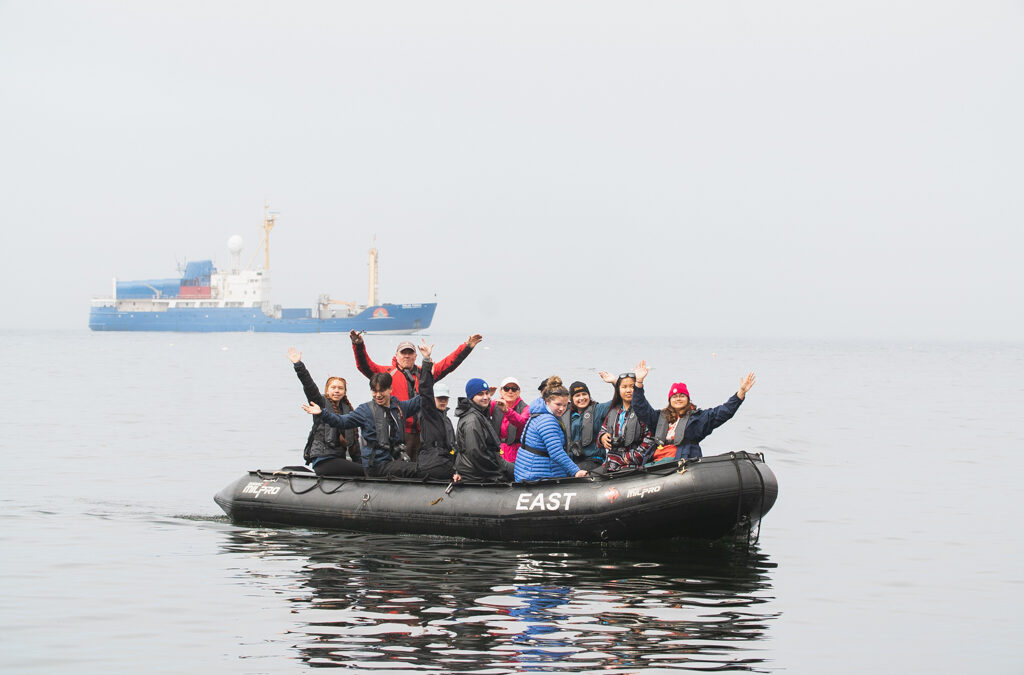
It was a dizzying whirlwind of an expedition but we’re thrilled that our journey around Cape Breton (Unama’ki) & Sable Island was an overwhelming success. From the day we landed in Halifax, to boarding our ship the Polar Prince, to returning back to Mulgrave, Nova Scotia, with a surprise welcome back from SOI’s Viceregal Patron, the Governor General of Canada, Her Excellency Mary Simon! An amazing way to conclude our SOI expedition.
It was an inspiring journey on so many levels. We connected with place, people, culture, history, nature, and definitely the ocean! Protected and conserved areas were central to most of our days, including visits to National Parks, National Wildlife Areas, a Biosphere Reserve, and future Indigenous Protected and Conserved Areas.
The time we spent together before we set sail was full of introductions, team bonding and visits to friends and partners in Halifax. We got to know our expedition team, educators, and each other a bit better. We felt like one big family as we learned through games, song, and dance. Lynda Brown from SOI and Jody Tulurialik, one of our fellow expeditioners, surprised us with a traditional throat singing performance, one of the many opportunities we had to experience the cultures from coast to coast to coast across Canada.

“We’re all different in our own way, but we have these similarities in how we treat one another, how we treat the land…” Tukai Augiak, SOI youth participant
In Halifax, we had the chance to visit with industry partners when we spent time with our friends at COVE, the Centre for Ocean Ventures and Entrepreneurship and learned about some of the exciting innovation that is happening in the blue economy. In Port Hawkesbury, we had a private tour of the Nova Scotia Community College Straits Campus. Not only did they show us the wave simulation pool, but we also got to check out some of their other amazing simulation technology. This was an opportunity for us to try our hand at captaining a ship, and working in the navigation and engine rooms. A visit to the Friends United International Convention Centre was a chance to see some extraordinary Indigenous art from across the country and to meet an inspiring Mi’kmaq artist named Loretta Gould! We also took this opportunity to discuss two-eyed seeing, a way of looking for solutions with both a scientific and cultural perspective. As the day wrapped up our excitement to board the Polar Prince, our floating home and classroom for the expedition ahead was building!
“With the Ocean, you don’t only have to be a scientist or a researcher, you can be an entrepreneur, you can be an engineer, you can be working on artificial intelligence, there are so many different avenues you can take which is really inspiring” – Emma Touchie, Ocean School youth representative
After a last-minute visit to the Mulgrave Maritime Museum and a surprise trip to the adjacent ice cream shop, we excitedly strolled down the shore to the Polar Prince! There was still a flurry of last-minute preparation underway, and some of our team were immediately put to work helping to load provisions!
All SOI expeditions over the past two decades have been made possible thanks to so many generous partners (individuals, organizations, governments) and teamwork. Miawpukek Horizon Maritime Services, the owners of the Polar Prince are one of those partners that made this summer’s expedition possible, and we thank them so much. Welanin!

Finally, it was time to board the ship, meet the Captain and crew, and have our first amazing meal on board prepared by Gail, Jeff, and Tenille. Later that evening, we set sail out of the Canso Canal!
Some of SOI’s extraordinary partners help to send educators, scientists, elders, and experts as members of our education team on each SOI expedition. We were so fortunate to have Dr. Katriina Ilves from the Canadian Museum of Nature, Sue Abbott from the Canadian Wildlife Service, and Mathieu D’Astous from Parks Canada, as three members of our team on this expedition. Not only did they help us find the answers to our questions like, “what type of bird is that?” but also served as mentors and inspired us with a new sense of excitement and interest.
Our very first landing was on St. Paul Island. This small island located between Cape Breton and Newfoundland has so much cultural, historical, and environmental significance. In the early morning fog, we geared up in our expedition vests and hats generously provided by Canada Goose. That first Zodiac ride was awfully exciting! When we made shore Katriina jumped right in with a seine net workshop where she caught a sculpin, gunnel, and some ctenophores with many of our youth team. We made sure to make the best of our time here and packed in numerous educational moments and activities including learning more about the island’s geology and why it is on track to become a new National Wildlife Area.

The expedition days ahead were all packed with discovery, awe, and wonder as we sailed the coastline of Unama’ki and entered Bras d’Or Lake, a UNESCO World Biosphere Reserve.
Our first stop was to the town of Baddeck to visit the Alexander Graham Bell National Historic Site. The spirit of innovation was in the air as we got to explore this location. We even had a “white-glove” tour where we saw some inventions and prototypes of Alexander Graham Bell that few people get a chance to see. After lunch, we were very fortunate to actually visit the private Bell Estate known as Beinn Bhreagh, where we were warmly welcomed on the beach by several descendants of the Bell family. We could not have asked for a more beautiful afternoon to explore and hike together. We were even given the opportunity to go inside Bell’s mansion for a private tour.
At the top of Beinn Bhreagh or “Beautiful Mountain,” we visited Alexander and Mabel’s gravesite. Incredibly, 2022 marks the 100th Anniversary of their passing and the incredible impact they had on the world. With the view out over Bras d’Ors Lake, there was a peaceful and contemplative feeling in the air. Keeping the concept of two-eyed seeing in our minds, one of our youth expeditioners Ryan Toney conducted a tobacco offering to honour the spirits of Alexander Graham and Mabel Bell, and show our respect and appreciation for being able to experience this place. We got a strong sense of what Etuaptmumk can mean.
The cultural learning continued the next day as we made our way to Goat Island in Eskasoni. Here we learned about different facets of past and present Mi’kmaw life; trade, hunting, fishing, dancing, medicines, and more. We cooked bannock over an open flame and participated in a smudging ceremony, conducted by one of our 2018 alum Dre Toney and his brother Ryan.

Our next destination was Louisburg, a reconstruction of an 18th Century French fortress, now a Parks Canada living history museum and a National Historic Site. During our visit, we had a chance to learn a bit about how Parks Canada is currently working to further include Mi’kmaq history and Etuaptmumk into the story of the fort. Our SOI team offered to follow up with some ideas and suggestions. We also went on a few hikes around the area. Some of us went with Peter Croal on an archaeological walk of the ruins in this area, while others went with Sue Abbott (Canadian Wildlife Service), and Clayton (an ecologist from Parks Canada) to do some bird spotting. We were able to identify over 10 different species of bird including; yellow warblers, American goldfinches, and Savannah sparrows. The final portion of our team joined Katriina at the intertidal zone and tried to identify more crabs and periwinkles.
Then we were off to Sable Island!
Our early morning arrival was a foggy one for our first landing was at East Point. Landing on the immense sandy beach with hundreds of Grey Seals curiously watching from us the shore, along with a half dozen wild horses staring down at us from the dunes, is something we’ll never forget. This was the first moment of two incredible days to follow.
At East Point we hiked to the ruins of an old building which belonged to the family that ran the lighthouse, now being swallowed up in the ever-shifting dunes. Despite the pouring rain we managed to keep ourselves relatively dry. OK, not really! We went on to conduct experiments including eDNA testing, population sampling, weather-related research, and digging for fresh water (like the horses!)
And oh those incredible and unique wild horses that call Sable Island home! With a shorter life expectancy and smaller stature than the average horse, the Sable Island horses have earned themselves the distinction of being their own species. There is now an estimated population of 569 horses on the island, and we were so fortunate to have numerous encounters with many of them!
In the afternoon on our first day at Sable, we all hiked to the top of Bald Dune – the largest and highest sand dune on the island. We had an incredible view of both sides of Sable Island and the beautiful blue ocean that surrounds it. George played us a moving piece about a glacier receding in Greenland. It served as a perfect and peaceful moment to reflect about the environment and our place within it as we sat on the sand dunes, with wild horses in the distance. Later in the day Jody joined George for a performance and sang what very well could be the first song performed in Inuktitut on Sable Island. This spilled over into a beautiful conversation about music, and life in general.

Our second day was filled with more of the same science, wonder, awe, and discovery, except this time under the bright and warm Atlantic summer sun. We visited West Light and helped a research group work on the FATIMA project, which is focused on the fog that lingers on Sable Island. Our work continued as we visited the main research station established by Parks Canada. We conducted a survey of the Tern colony, being extra careful not to step on any of the adorable brown fuzzy chicks! They sure were cute but the parents did not appreciate our presence and continually swooped and dive-bombed us.
We were able to meet the incredible Zoe Lucas, who has called Sable Island home for the past 50 years. She initially came for the horses and stayed on the Island to conduct more and more research, including her ongoing project focused on plastics in the ocean. Zoe helped us to look for culturally focused solutions to climate problems and challenges like microplastics in the ocean. We were present, we were thankful, and we were grounded.
We were all sad to leave Sable Island but Geoff Green, our expedition leader informed us that we were going to stop at one more island. This island was part of the 100 Wild Islands – one of the last remaining intact and ecologically rich island groups of this size in North America. Up to 85 percent of this area is protected, with more work being done for the final 15 percent.
Once again in the early morning fog, we landed at a beautiful beach protected from the high winds. We explored the geology of the island with Peter Croal, who helped us understand the impact that climate change had on the rocks just in front of us, and discovered some searocket with Sue Abbott. Some of our brave expeditioners found out it tastes just like a peppery arugula! Finally, we kept up the SOI tradition of a cold ocean swim, “Polar Plunge Atlantic Edition!” And Danika showed us an Inuit game called the one-foot-high-kick, with many of our team giving it a try.
As we wrapped up our final day on expedition, in between all of the packing, we had the chance to reflect on our journey. It will take weeks, months and years to digest and process it all. But, we were all feeling grateful for the shared experiences, ideas, friendships, connections, and more. As we always say, the expedition is just the beginning…
“Seeing how big the alumni family is and all the connections that are there, it’s really exciting to think of all the things I can do because I came here.” – Kels Smith, SOI youth participant
There was one last surprise. Their Excellencies, Mary Simon and Whit Fraser were waiting to welcome us back in Mulgrave! As the first Indigenous Governor General of Canada, Mary shared some powerful messages for all of us, including encouraging everyone to keep and learn their Indigenous languages. Whit shared an emotional story about how he and Mary first met, and how incredible their journey has been together, leading all the way to Rideau Hall!

Just as we did on our first day, we went for ice cream, after disembarking the Polar Prince! With more “see-you-soons” and “until next times” than “goodbyes” we all said our farewells. Exchanging emails and @’s made sure we would keep in contact with one another as we venture out into the world with some new perspectives, ready to dive into our own blue futures.
Our incredible journey would not have been possible without the amazing support from our friends and partners. Thank you to all of the organizations that helped make this expedition such a success; Alexander Graham Bell National Historical Site, The Canadian Museum of Nature, Canadian Wildlife Service, Canadian Coast Guard, Canada Goose, Crown-Indigenous Relations and Northern Affairs, COVE, Dalhousie University, The Embassy of the United States in Canada, Friends United International Convention Centre, Inuvialuit Regional Corporation, Makivik Corporation, Marine Institute, Miawpukek Horizon Maritime Services, National Research Council of Canada, Nawalakw Healing Society, Nova Scotia Community College, Nunatsiavut Government, Ocean Elders, Oceans North, Ocean School, Parks Canada, Polar Knowledge Canada, RMBMU, Sable Island Institute, Theresa Baikie.
Wild horses, grey seals, and moving coastlines? Oh my!
June 23, 2022, marks the kick-off of our expedition to Cape Breton and Sable Island! This program will be the return of SOI to our true exploration roots, taking a group of nearly 40 students and educators to national parks, biospheres, and Indigenous lead conservation areas and communities in order to empower and inspire leadership for a sustainable future.
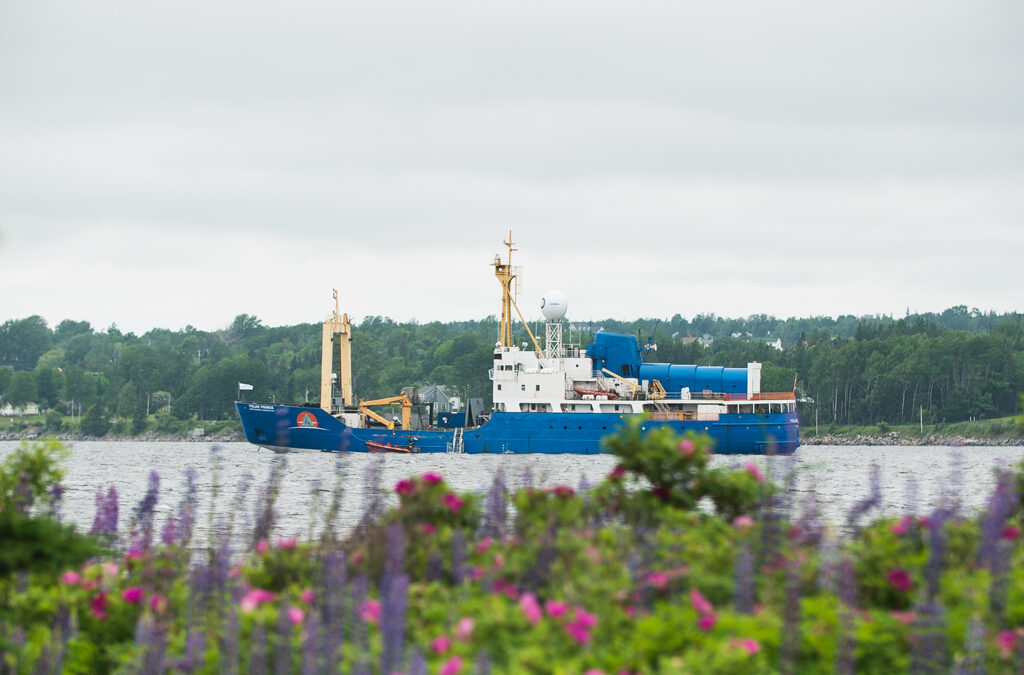
Our expedition team will be sailing aboard the Polar Prince, the same vessel we used for the historic Canada C3 journey. Recently purchased by Miawpukek Horizon Maritime Services Ltd. and through a great partnership with this newly co-owned Indigenous ship, the Polar Prince will be SOI’s main vessel for the next three years. We’re beyond excited for Miawpukek Horizon Maritime Limited and look forward to our partnership this summer and beyond!

Our journey will circumnavigate Cape Breton, traditionally known as Unama’ki, and take us to Indigenous Protected and Conserved Areas, National Wildlife Areas, and many other environmentally protected areas along our route to Sable Island. We’ll also be visiting Eskasoni, one of five Indigenous communities that call this place home. Experiencing all Unama’ki has to offer is a special opportunity and we’re thrilled to be able to experience it.
The first few days of this expedition will be on the land, where we’ll begin to learn about some of the scientific and cultural elements we’ll be exploring more deeply later on our expedition. A tour of COVE and Nova Scotia Community College’s Straits Campus will help set the tone for the importance of our blue future, while Elder Albert Marshall will teach us about Etuaptmumk or, a Two-eyed seeing approach, and help us ground in place for the rest of the expedition. This will help to give everyone on the expedition a new perspective on how we can integrate culture into science and help protect these areas for future generations.

Excitement builds as we set sail on the Polar Prince, diving deeper into the cultural and historic elements of Unama’ki. We’ll be visiting places like St. Paul Island, Kluscap’s Caves, and Eskasoni to help us connect to the land on a personal level. Hearing the history of the region and of the people that have always called this place home since time immemorial will give us a new appreciation and perspective from which to view this remarkable place. Along with the incredible culture and people, this will be our first introduction to some of the protected areas we’ll be visiting and wildlife we’ll hopefully encounter.
After that our focus will shift ever so slightly towards some of the technology and advancements made in the name of environmental sustainability. Excursions to places like the Alexander Graham Bell Estate and the Coast Guard College, will help give us an idea of how efforts have been made for years in the name of innovation, and how these inventions work with cultural practices for the benefit of the environment. Now that we’ve learned about the cultural and scientific importance of protecting our land and oceans, we’ll apply it on Sable Island.
Our expedition allows us three days on Sable Island National Park Reserve where we’ll dive deep and put into practice some of the concepts we’ve been learning about along our journey. We’ll get to explore the incredible landscape, unique and isolated wildlife, and history of this Canadian landmark. Sable Island provides a special environment where the land interacts with the ocean in unique ways, and proves to be a haven for coastal and migratory birds. We’ll also get the chance to apply some of our newly acquired knowledge and perform some EDNA testing and population sampling. Our time here will help tie in the concepts that we’ve been learning with the important theme of protecting our oceans for generations to come.

Our final few days of this program will give us a chance to reflect on all that we have just learned. We’ll head back to the mainland for a wrap-up ceremony where we’ll be able to decompress, reflect and connect with one another for the future.
“We are so excited to be back out there, doing what we love!” says SOI founder and Expedition Leader Geoff Green, “Bringing youth to experience these incredible places is inspirational, and gives us hope for a more sustainable blue future for Canada, and the rest of the world!”
We look forward to sharing this incredible journey with all of Canada via our social media channels and website, and cannot wait to set sail!
View the expedition page to see all the details and follow along with our adventure!